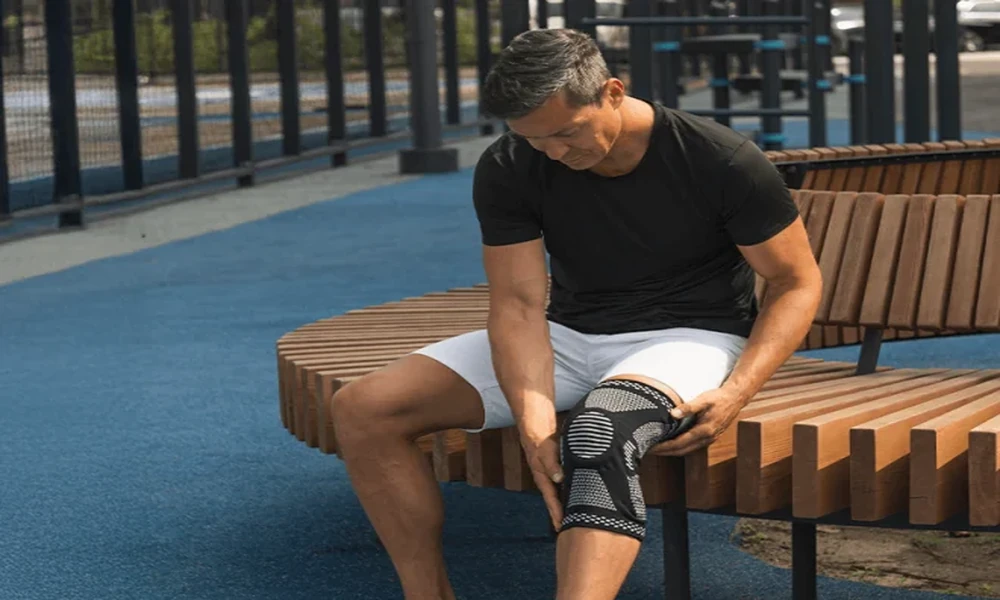
Knee pain has become a widespread issue frequently leading people into the doctors and orthopedic clinics for diagnosis. The major solution that comes out of these visits is the incorporation of a knee cap or knee brace. But, doctors don’t recommend just any knee cap. The proper fit, type and features play a major role in their suggestion of a knee cap for pain relief.
This guide will explain what doctors look for while recommending the knee cap support and how it might ease the discomfort after use.
Let’s dive in!
Why Knee Cap Is Highly Recommended By Doctors?
Doctors and orthopedic surgeons highly recommend knee caps for pain relief because they control swelling and enhance joint stability without limiting natural movement.
1. Inflammation Control
Early arthritis can cause an excess buildup of synovial fluid which limits range of motion. The targeted compression physically prevents this fluid from accumulating. By reducing swelling, the knee cap improves mobility and prevents the surrounding thigh muscles from weakness.
2. Neurological Biofeedback
Knee pain often distorts the brain’s ability to sense joint alignment, leading to micro-slips that cause further damage. The fabric of a knee cap constantly stimulates sensory neurons on the skin surface called as mechanoreceptors.
This gives the brain mechanical feedback, improving balance, awareness and movement control during physical activity.
3. A Safe Alternative
For mild to moderate issues, doctors prefer starting with simple, flexible slip-on sleeves over heavy and mechanical braces. A flexible knee cap provides external support while aiding long-term rehabilitation.
4. Confidence and Function
Patients feel significantly more confident moving when wearing a compression sleeve. The sleeve minimizes sudden aches and protects the joint from side to side instability, patients are more likely to stay active. Compression sleeves in physical therapy is the best way to naturally rebuild bad knees.
4 Conditions In Which Doctors Suggest A Knee Cap
1. Chronic Degenerative Conditions
- Joint Stiffness
For senior citizens, a basic knee cap is highly recommended to improve balance, stability and reduce the risk of accidental falls.
- Osteoarthritis
Doctors recommend knee caps to trap heat and compress the joint. It helps to thin out stiff joint fluid, increase circulation and minimize the ache of degenerating cartilage.
2. Kneecap Tracking and Overuse Syndromes
- Knee Bursitis
When the fluid filled sacs around the knee become inflamed from repetitive kneeling, compression helps compress the swelling.
- Runner’s Knee
When the kneecap misaligns and rubs frictionally against the thigh bone, doctors recommend an open-patella knee cap (with a built-in gel ring) to physically guide the kneecap down its proper path.
- Patellar Tendinitis
For chronic inflammation of the tendon right below the kneecap, compression sleeves are recommended to absorb and distribute the mechanical forces passing through the lower thigh.
3. Minor Soft Tissue Strains
- Mild Ligament Sprains
For minor stretching of the ligaments, a knee cap keeps the joint stable enough to prevent micro twisting while it heals.
- Mild Meniscus Strains
When a minor tear occurs, these sleeves can help to manage localized swelling.
4. Rehabilitation
Surgeons often recommend a compression knee cap to manage lingering swelling and rebuilding strength after surgery.
Features Doctors Commonly Emphasize on
| CATEGORY | PREFERRED FEATURE | REASON |
|---|---|---|
| Fabric | Moisture-wicking 3D knit (or heat-trapping neoprene for arthritis) |
|
| Rigidity | Flexible compression (with side stays only if ligaments are weak) |
|
| Fit | Anatomically contoured shape with top silicone grip strips |
|
| Adjustability | Velcro straps or independent tension zones |
|
Doctors Advice Along With Knee Cap
1. Avoid Dependency
- If you keep the sleeve on constantly, your nervous system realizes it doesn’t have to work as hard and the surrounding muscles, especially quadriceps will start to show atrophy.
- Wear the knee cap only during risky activities like workouts or long walks. You can take it off when you are resting or sleeping so that the leg muscles are forced to stay active and strong.
2. Prioritize Joint Lubrication
Because knee cartilage has no direct blood supply, it stays healthy through a process called imbibition which is essentially a sponge effect where movement pumps nutrient rich joint fluid into the tissue. Doctors advise replacing high impact habits with joint friendly movements like
- Stationary Cycling
Smooth, continuous pedaling with low resistance lubricates the joint without slamming your body weight into the cartilage.
- Swimming or Pool Walking
The natural buoyancy of water strips away up to 90% of your body weight, allowing your knee to move through its full range of motion entirely pain free.
3. Build the Internal Brace (Targeted PT)
A knee cap supports you from the outside, but doctors want you to build an internal brace using your own anatomy. They routinely prescribe physical therapy focused on
- Inner Quad
Strengthening the inner thigh muscles actively pulls the kneecap inward which ensures it tracks straight in its groove.
- Glute Medial Muscles
Weak hips cause thigh bones to collapse inward when putting a massive twisting strain on the knee. Strengthening hips protects the knee from this rotational stress.
4. Manage Systemic Inflammation
Mechanical wear creates a physical problem, but your daily habits dictate how intensely your immune system responds to that wear. Doctors commonly recommend:
- The Elevation
Instead of just sitting on the couch with a pillow under your foot, elevate your leg above heart level when you take the knee cap off. This uses gravity to actively drain trapped inflammatory fluid out of the joint capsule.
- Hydration
Synovial fluid helps to fully hydrate the joints and ensures proper lubrication in between the bones, thus providing maximum internal shock absorption.
Wrapping Up
Doctors’ recommendations are mostly governed by the condition of the knee injury as well as its severity. Understanding that it is a strategic preventive tool instead of an ultimate treatment. The knee cap for pain relief is a supportive aid which best functions along with some lifestyle changes. A proper fit, appropriate type and use as a part of a broader treatment plan helps to broaden the treatment instead of a temporary fix.