Parents often wonder what’s going on in their baby’s mouth before the first tooth breaks through. The drooling, fussiness, and chewing on everything for weeks before anything appears can be puzzling—and a little worrying. Understanding the state of baby teeth before eruption puts everything in context and helps parents recognize the signs of dental development.
Baby teeth begin forming in the womb and are fully developed below the gum line well before they erupt. A baby is born with all 20 primary teeth already formed inside the jaw, waiting to push through at their designated time. Because baby teeth before eruption are already sitting within the bone, they can cause pressure and sensitivity long before you see a white speck.
How Baby Teeth Develop Before Birth
Tooth development begins surprisingly early – around week 6-8 of pregnancy. By the time a baby is born:
- All 20 primary tooth buds are formed and sitting in the jawbone
- The crowns (visible tops) of the front teeth are nearly complete
- The roots are still forming and will continue to develop as the teeth erupt
This is why maternal nutrition during pregnancy – particularly calcium, phosphorus, vitamin D, and vitamin C – matters for baby tooth development.
The Eruption Timeline
Baby teeth don’t erupt randomly. There is a predictable sequence:
| Tooth | Typical Age of Eruption |
|---|---|
| Lower central incisors (bottom front) | 6-10 months |
| Upper central incisors (top front) | 8-12 months |
| Upper lateral incisors | 9-13 months |
| Lower lateral incisors | 10-16 months |
| First molars (upper and lower) | 13-19 months |
| Canines / cuspids | 16-22 months |
| Second molars | 25-33 months |
All 20 baby teeth are usually present by age 3.
Important note: There is a wide range of normal. Some babies cut their first tooth at 4 months; others not until 14 months. If your baby has no teeth by 18 months, mention it to a dentist – but in most cases, it’s simply a natural variation.
Signs Teething Is Starting (Even Before the Tooth Appears)
Teething typically begins weeks before the actual eruption:
- Increased drooling – often the first sign; saliva production increases
- Chewing and gnawing on hands, toys, or anything within reach
- Swollen, red, or bulging gum tissue over the emerging tooth
- Irritability or fussiness – particularly in the evenings
- Disrupted sleep – more frequent night waking
- Slight gum swelling or a bluish “eruption cyst” – a harmless fluid-filled bubble that often precedes eruption
Eruption Cysts – What They Are
Some babies develop a soft, bluish or blood-filled bump on the gum right before a tooth breaks through. This is called an eruption cyst or eruption hematoma.
It looks alarming but is almost always harmless and resolves on its own when the tooth erupts through it. No treatment is needed in the vast majority of cases. If it doesn’t resolve after the tooth erupts, or is painful and swollen, mention it to a dentist.
What Teething Is NOT Responsible For
This is one of the most important things for parents to know:
| Symptom | Is It Teething? |
|---|---|
| Mild drooling and fussiness | Yes – commonly linked |
| Gum rubbing and chewing | Yes |
| Slightly elevated temperature (below 38°C/100.4°F) | Possibly – minor inflammation |
| High fever (above 38°C/100.4°F) | No – always investigate separately |
| Diarrhoea | No – despite the common belief |
| Severe cold symptoms | No – seek medical attention |
| Rash (except around the mouth from drool) | No |
Fever and diarrhoea around teething age are coincidental – babies this age are becoming more mobile, putting objects in their mouths, and losing maternal antibodies. Infections are common. Never attribute fever to teething without ruling out illness.
Relieving Pre-Eruption Discomfort
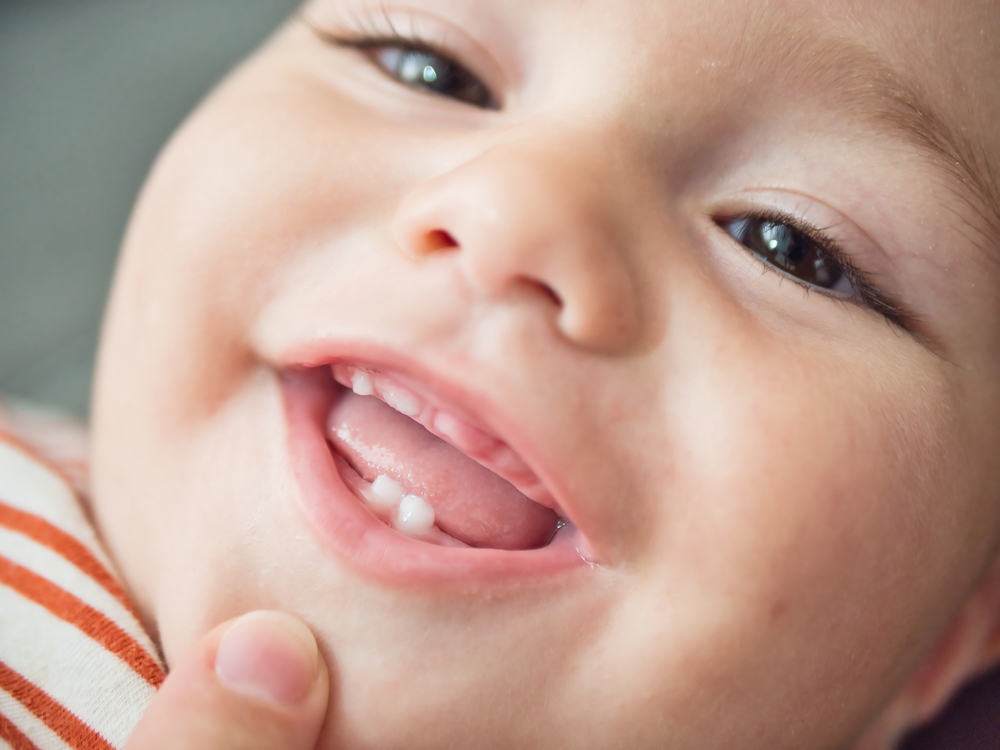
Before the tooth even appears, the pressure beneath the gum is often what causes discomfort:
- Cold teething rings (chilled, not frozen – frozen ones can be too hard and cause bruising)
- Clean finger massage – gentle pressure on the gum often provides relief
- Chilled washcloth – a wet cloth chilled in the fridge for the baby to chew on
- Teething toys – silicone or rubber teethers designed for the purpose
Avoid:
- Teething gels containing benzocaine (linked to a rare but serious condition called methemoglobinaemia in infants)
- Amber teething necklaces – a choking and strangulation hazard with no proven benefit
When to See a Dentist
The American Academy of Pediatric Dentistry recommends a baby’s first dental visit by age 1 or within 6 months of the first tooth erupting – whichever comes first. Early visits establish a dental home, check eruption progress, and identify any issues early.
See a dentist sooner if:
- No teeth by 18 months
- An eruption cyst doesn’t resolve after tooth erupts
- Teeth look discoloured or pitted at eruption
- Teeth are erupting in an unusual sequence
Bottom Line
Baby teeth are fully formed beneath the gums before birth and quietly wait their turn to emerge. The fussiness, drooling, and gum chewing that precede eruption are real – the pressure building beneath the gum tissue is genuinely uncomfortable for many babies. Understanding the timeline and what’s normal keeps the experience manageable for both parent and baby, and knowing which symptoms are NOT teething-related is equally important.