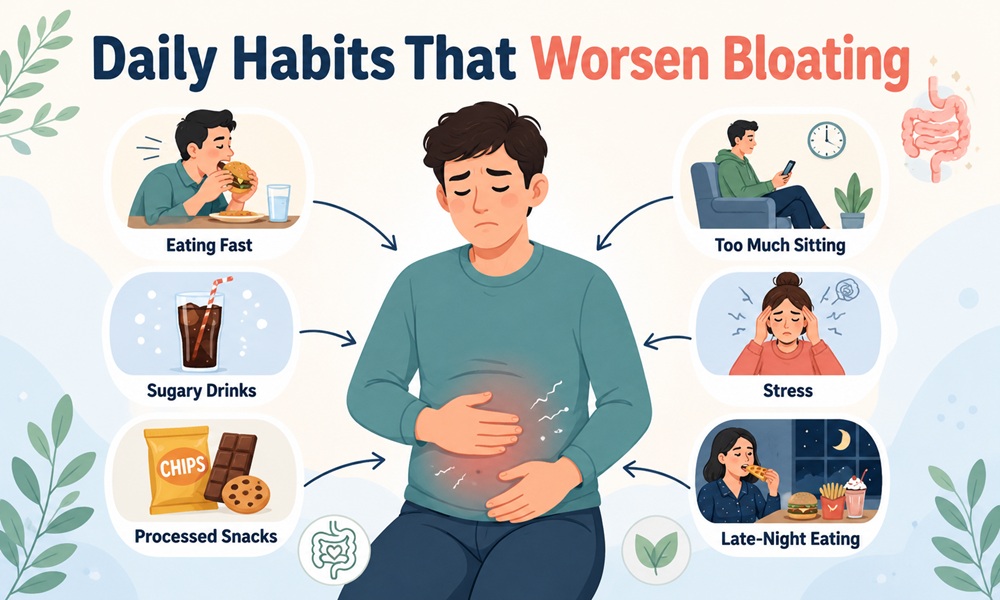
Bloating affects a huge share of adults — estimates run from roughly 10% to 25% of people. Often it is not a disease at all, but the result of a handful of small daily habits stacking up. The encouraging news is that most bloating can be eased without special supplements, simply by spotting and changing the habit behind it. Here are nine of the most common culprits, each with a practical fix.
1. Eating too fast
When you rush a meal, you swallow more air and barely chew your food. Both add gas and pressure to the gut, and poorly chewed food is harder to break down.
Slow down. Put the fork down between bites, chew thoroughly, and aim to stretch a meal over at least 15–20 minutes. It is the single easiest change for many people.
2. Loading up on high-FODMAP foods
FODMAPs are fermentable carbohydrates found in foods like wheat, onion, garlic, beans, certain fruits and dairy. They pull water into the gut and are fermented by bacteria into gas. Most people tolerate them fine; sensitive guts, including those with IBS, do not.
If bloating is frequent, a short, guided low-FODMAP trial (ideally with a dietitian) helps about 70–75% of people with IBS. It is a diagnostic learning tool, not a forever diet — you reintroduce foods to find your personal triggers.
3. Increasing fiber too suddenly
Fiber is healthy and important, but a big, sudden jump ferments quickly and produces a wave of gas.
Add fiber gradually — about 5 g per week — and drink more water alongside it so it moves smoothly.
4. Skipping movement after meals
Sitting still after eating slows the gut, and trapped gas builds up, which is when many people feel the post-lunch swell.
A 10–15 minute walk after meals keeps things moving and noticeably eases bloating.
5. Living with chronic constipation
Stool that lingers in the colon ferments and produces more gas, which directly feeds the bloat. Constipation is one of the most common and overlooked causes of a swollen belly.
Treat the constipation first — fiber, fluids, movement and a regular bathroom routine. Deflating the backlog often deflates the bloat.
6. Drinking through a straw and chewing gum
Both habits make you swallow extra air throughout the day, which has to go somewhere.
Sip straight from the glass and cut back on gum if you bloat easily.
7. Drinking too much carbonation
Fizzy drinks deliver carbon-dioxide gas straight into the stomach, so the bloat is almost immediate.
Swap some sparkling drinks for water or herbal tea, especially before social events or meetings.
8. Hidden additives and sweeteners in processed foods
Certain additives and sugar alcohols — polyols like sorbitol and xylitol found in “sugar-free” products — can irritate a sensitive gut and trigger gas and bloating.
Scan labels on sugar-free gums, mints and snacks if you notice a pattern, and cut back on heavily processed foods.
9. Eating huge portions in one sitting
Even gut-friendly foods will bloat you in large volumes; the stomach stretches and internal pressure rises.
Eat smaller, slower, more frequent meals rather than one or two oversized ones.
When bloating is more than a habit
Occasional bloating is normal and usually harmless. But see a doctor promptly for new or worsening bloating that comes with weight loss, blood in the stool, persistent pain, vomiting, or trouble swallowing. These warrant evaluation rather than self-management, especially if the bloating is new for you or steadily getting worse.
Frequently Asked Questions
Why am I always bloated even when I eat healthy?
Many healthy foods — beans, onions, garlic, broccoli and some fruits — are high in FODMAPs, which ferment and produce gas in sensitive guts. Portion size, eating speed and constipation also play big roles, so “healthy” alone does not guarantee comfort.
Do probiotics help with bloating?
They may, but the strain and timing matter. Expect to trial a specific strain for 2–4 weeks before judging it. Fermented foods like yogurt and kefir are a natural starting point.
Is the low-FODMAP diet permanent?
No. It is a short elimination phase followed by structured reintroduction to identify your personal triggers. Long-term blanket restriction can actually harm your gut bacteria, so it is best done with guidance.
How can I de-bloat quickly?
A short walk, peppermint or ginger tea, gentle abdominal massage, and avoiding fizzy drinks and gum can all help in the moment. Treating any underlying constipation gives longer-lasting relief.