Part 1: Early Stage Discoid Lupus Rash – What to Look For
Most people have heard of systemic lupus, but fewer know about discoid lupus erythematosus (DLE)—a chronic inflammatory skin condition that affects primarily the skin rather than internal organs. Identifying the early stage discoid lupus rash is critical, as prompt treatment can prevent the permanent scarring and hair loss that often follow the active phase of the disease.
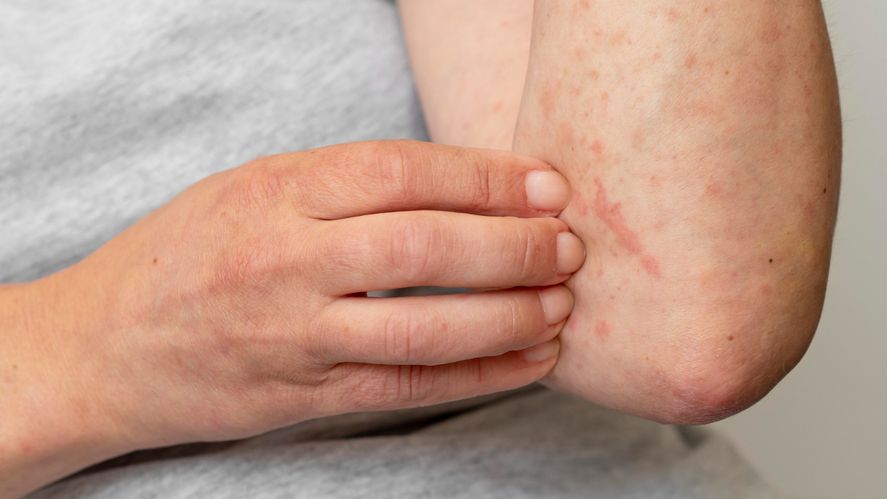
In its early stage, the rash typically appears as red, coin-shaped (discoid) patches on sun-exposed areas of the body—most commonly the face, scalp, and ears. These patches are usually scaly, slightly raised, and may feel tender or itchy. Over time, the center of the patch may become lighter in color (hypopigmentation) while the edges remain dark or red, often leading to a “plugged” appearance in the hair follicles.
What Early Stage DLE Looks Like
The rash usually starts subtly, which is why it’s often mistaken for eczema, psoriasis, or even ringworm in its early form.
| Feature | Early Stage DLE |
|---|---|
| Shape | Round or oval (coin-shaped) |
| Color | Red to pink, sometimes with a darker center |
| Texture | Raised, rough, or scaly surface |
| Location | Face (cheeks, nose, ears), scalp, neck |
| Sensation | Mild itching or tenderness, or none at all |
| Sun sensitivity | Rash worsens with sun exposure |
Over time, if untreated, the patches can develop a thick, adherent scale and may leave permanent scarring or pigmentation changes – which is why early identification matters.
Where It Appears Most Often
- Cheeks and nose (in a butterfly pattern, similar to systemic lupus)
- Scalp – can lead to patchy hair loss (scarring alopecia) if not treated
- Ears – inside and around the outer ear
- Neck and upper chest
It tends to be worse in areas exposed to UV light.
Is Discoid Lupus the Same as Systemic Lupus (SLE)?
No – but they are related. DLE is a skin-limited condition in most people. However, around 5-10% of people with DLE may go on to develop systemic lupus erythematosus (SLE), which affects internal organs. Regular monitoring is important.
When to See a Doctor
See a dermatologist promptly if:
- You have persistent red, scaly patches on your face or scalp that don’t respond to standard skincare
- Patches are leaving dark marks or scars
- You’re noticing hair loss in affected areas
- You have any other lupus-related symptoms (joint pain, fatigue, sensitivity to light)
Diagnosis typically involves a skin biopsy and blood tests.
Part 2: What Is the Fastest Way to Heal Swollen Gums?
Swollen gums are uncomfortable and hard to ignore. The good news is that mild swelling can often be significantly reduced within 24-72 hours with the right approach.
The fastest way to heal swollen gums is to rinse with warm salt water, maintain thorough oral hygiene, apply a cold compress for relief, and address the underlying cause – whether that’s food debris, gum disease, or infection.
Why Gums Swell in the First Place
Before diving into remedies, it helps to know what’s causing it:
| Cause | Details |
|---|---|
| Gingivitis | Plaque buildup causes gum inflammation |
| Food debris trapped | Particle stuck between tooth and gum |
| Gum infection (abscess) | Bacterial infection – may require dental treatment |
| Vitamin deficiency | Low vitamin C or B12 can cause gum problems |
| Hormonal changes | Pregnancy or menstrual cycle can cause gum sensitivity |
| New toothbrush or product | Can cause temporary irritation |
| Ill-fitting dental appliances | Dentures, braces, or retainers rubbing the gum |
Fastest Home Remedies for Swollen Gums
Salt Water Rinse
The most effective and proven first step. Salt draws out fluid, reduces bacteria, and soothes inflammation.
How to: Dissolve ½ teaspoon of salt in a glass of warm water. Swish for 30 seconds and spit. Repeat 2-3 times daily.
Cold Compress
For immediate pain relief and to reduce swelling, hold a wrapped ice pack or cold cloth against the outside of your cheek for 10 minutes on, 10 minutes off.
Clove Oil
Clove oil contains eugenol, a natural anesthetic and anti-inflammatory. Dab a small amount on a cotton ball and hold against the swollen area for a few minutes.
Turmeric Paste
Mix turmeric powder with a little water to form a paste. Apply to the gum and leave for 5 minutes before rinsing. Turmeric’s curcumin has well-documented anti-inflammatory properties.
Hydrogen Peroxide Rinse
Mix equal parts of 3% hydrogen peroxide and water. Rinse for 30 seconds – do not swallow. This helps kill bacteria and reduces gum inflammation.
Improve Your Brushing Routine
Use a soft-bristled toothbrush and brush gently at the gum line twice daily. Floss carefully once a day – don’t skip the areas near the swelling.
When to See a Dentist
Home remedies work for mild cases. See a dentist if:
- Swelling hasn’t improved after 3-5 days
- You have a visible lump or pus
- There’s intense pain, fever, or difficulty swallowing
- The swelling involves one tooth specifically (could be an abscess)
An abscess requires professional drainage and antibiotics – it won’t heal on its own.
Bottom Line
For early discoid lupus rash: early detection and sun protection are key – see a dermatologist as soon as possible if you notice suspicious patches. For swollen gums: start with salt water rinses and good oral hygiene. Most mild swelling responds within a few days. If it doesn’t, get it checked before it turns into something more serious.