That plugged-up, underwater feeling in your ear—whether after a flight, during a cold, or seemingly for no reason—is one of the most annoying minor health complaints there is. The Eustachian tube, which connects the middle ear to the back of the throat, has failed to equalise the pressure between your middle ear and the outside world. Knowing how to unblock eustachian tube via the Valsalva maneuver or gentle swallowing techniques can often provide immediate relief.
The most effective ways to unblock a Eustachian tube are the Valsalva manoeuvre, nasal decongestants, nasal steroid sprays (for persistent cases), and treating underlying causes like allergies or congestion. Most short-term blockages resolve within hours to days with the right approach.
Step 1 – Try These Immediate Techniques
The Valsalva Manoeuvre (Most Popular)
- Pinch both nostrils closed
- Close your mouth
- Gently try to blow out through your nose – as if you’re trying to blow your nose but with everything blocked
- Maintain gentle, sustained pressure – don’t blast hard
- You should feel a “pop” in one or both ears as the tube opens
Important: Use gentle, sustained pressure – not a forceful blast. Excessive pressure can damage the eardrum or force infection toward the middle ear.
The Toynbee Manoeuvre
- Pinch both nostrils closed
- Swallow
The swallowing motion activates the muscles that open the Eustachian tube; the nose-pinch creates the pressure differential needed for equalisation.
The Frenzel Manoeuvre (More Advanced)
- Pinch both nostrils
- Close the back of your throat (as if trying to say the letter “K”)
- Push the back of your tongue up toward the roof of your mouth
This uses the tongue as a pump to push air into the Eustachian tube without involving the lungs – more controlled than the Valsalva.
Jaw Movements
- Yawning opens the Eustachian tube via the tensor veli palatini muscle
- Wide jaw opening, chewing gum, or exaggerated yawning can all equalise pressure
- Particularly effective for mild blockage (e.g. after a flight)
Step 2 – Medical Treatments for Persistent Blockage
If the immediate techniques don’t resolve things, the issue is usually persistent inflammation or congestion blocking the tube opening:
Nasal Decongestant (Short-Term)
Oxymetazoline (Afrin/Sinex) or xylometazoline nasal spray reduces nasal mucosal swelling and the tissue around the Eustachian tube opening – allowing it to function.
How to use:
- 1-2 sprays per nostril
- Use for maximum 3-5 days – longer use causes rebound congestion (rhinitis medicamentosa)
- Best used 30 minutes before a flight if pressure change is the trigger
Nasal Steroid Spray (Best for Persistent Cases)
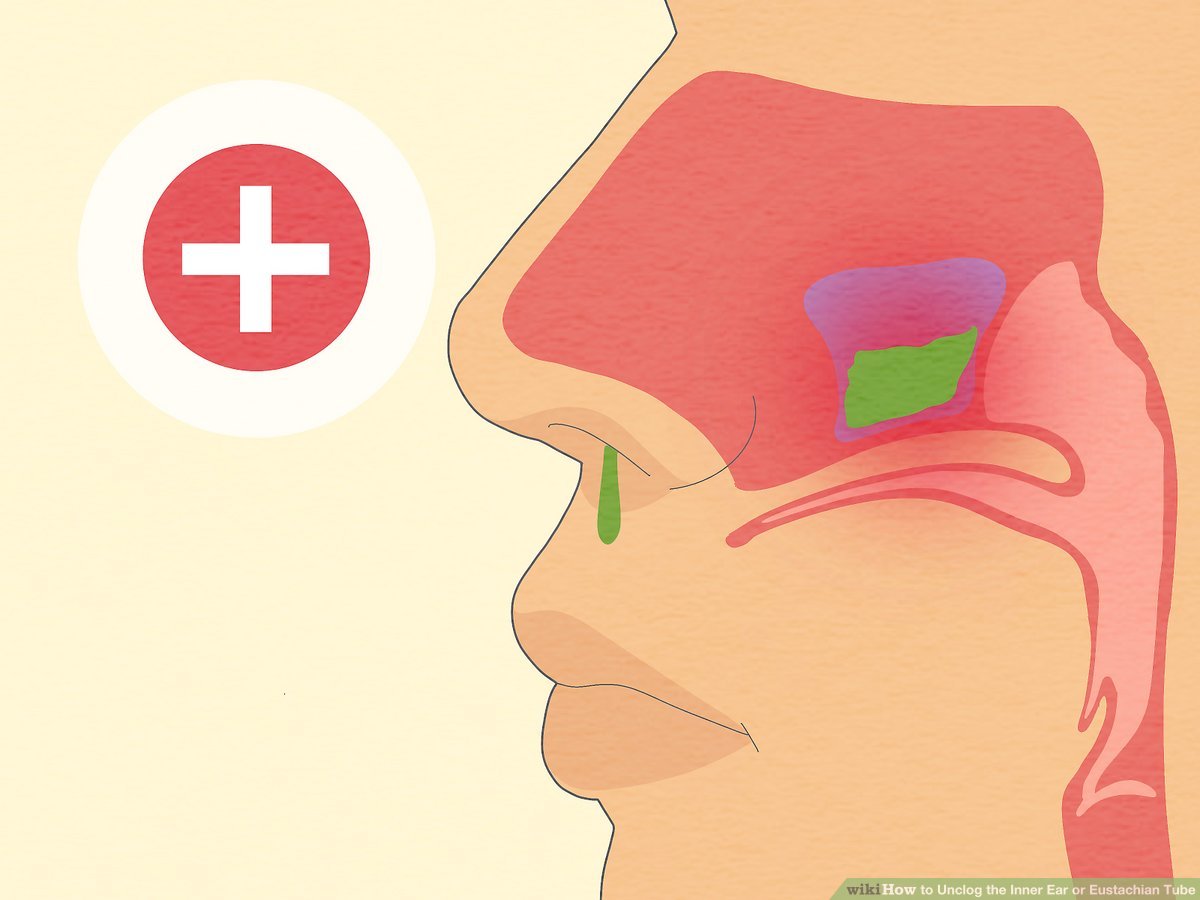
For Eustachian tube dysfunction that has lasted weeks, a nasal steroid spray (Flonase, Nasacort, Nasonex) is the most evidence-backed treatment:
- Reduces mucosal inflammation in the nasal cavity and around the Eustachian tube opening
- Takes 2-3 weeks to reach full effect
- Use daily for 4-6 weeks
- Proper technique matters: aim the spray toward the outer wall of the nostril, not straight up
Oral Decongestants (Pseudoephedrine)
Reduces systemic mucosal congestion. Less targeted than nasal sprays but useful when congestion is significant. Use for short periods only.
Treating Allergies
If allergies are the cause:
- Antihistamines (cetirizine, loratadine)
- Nasal saline irrigation (NeilMed, neti pot) – flushes allergens and mucus
- Identifying and avoiding triggers
Step 3 – Addressing Acid Reflux (LPR)
Laryngopharyngeal reflux – where stomach acid reaches the back of the throat – is an underrecognised cause of chronic Eustachian tube dysfunction:
- The acid irritates the area around the Eustachian tube opening
- Signs: chronic throat clearing, hoarseness, sensation of something in throat
- Treatment: dietary modification, PPIs (proton pump inhibitors), avoiding late eating and alcohol
Step 4 – Supportive Measures
- Steam inhalation – 10 minutes over a bowl of hot water with a towel tent; softens mucus and may reduce swelling
- Warm compress over the ear – can help with accompanying ear discomfort
- Stay hydrated – thin mucus is easier to clear
- Avoid flying during active upper respiratory infections – the pressure changes compound the problem
When Eustachian Tube Dysfunction Needs Medical Attention
See a GP or ENT specialist if:
- Blockage has persisted for more than 2-3 weeks
- Significant hearing loss alongside the blockage
- Pain, fever, or severe pressure suggesting middle ear infection (otitis media)
- Discharge from the ear
- Tinnitus (ringing) has developed
Severe or recurrent ETD may require a balloon Eustachian tuboplasty – a minimally invasive procedure that dilates the tube – or pressure-equalisation (grommet) tubes inserted through the eardrum in children and some adults.
What NOT to Do
- Don’t perform the Valsalva manoeuvre if you have a cold or sinus infection – it can push bacteria into the middle ear
- Don’t use cotton buds in the ear canal – this addresses nothing in the middle ear and can cause outer ear problems
- Don’t use ear candles – no evidence of effectiveness; risk of burns
Bottom Line
Most Eustachian tube blockages resolve with simple manoeuvres (Valsalva, yawning, chewing) or short-term nasal decongestants. For persistent cases lasting weeks, a nasal steroid spray used consistently for 4-6 weeks is the most evidence-based treatment. Addressing the underlying cause – whether congestion, allergies, or reflux – is what prevents it from recurring. If it hasn’t resolved after several weeks despite proper treatment, an ENT assessment and possibly balloon Eustachian tuboplasty is worth discussing.